Conservation of Tetisheri’s pyramid
Ahmose included this unusual structure in his Abydene building project to honor and deify his grandmother, Tetisheri, reflecting the strong matriarchal line of his Luxor-based royal family. Currelly recovered the famous stela of Tetisheri from inside this pyramid in1902 and brought it to Cairo where it now resides in the Egyptian Museum in Tahrir.
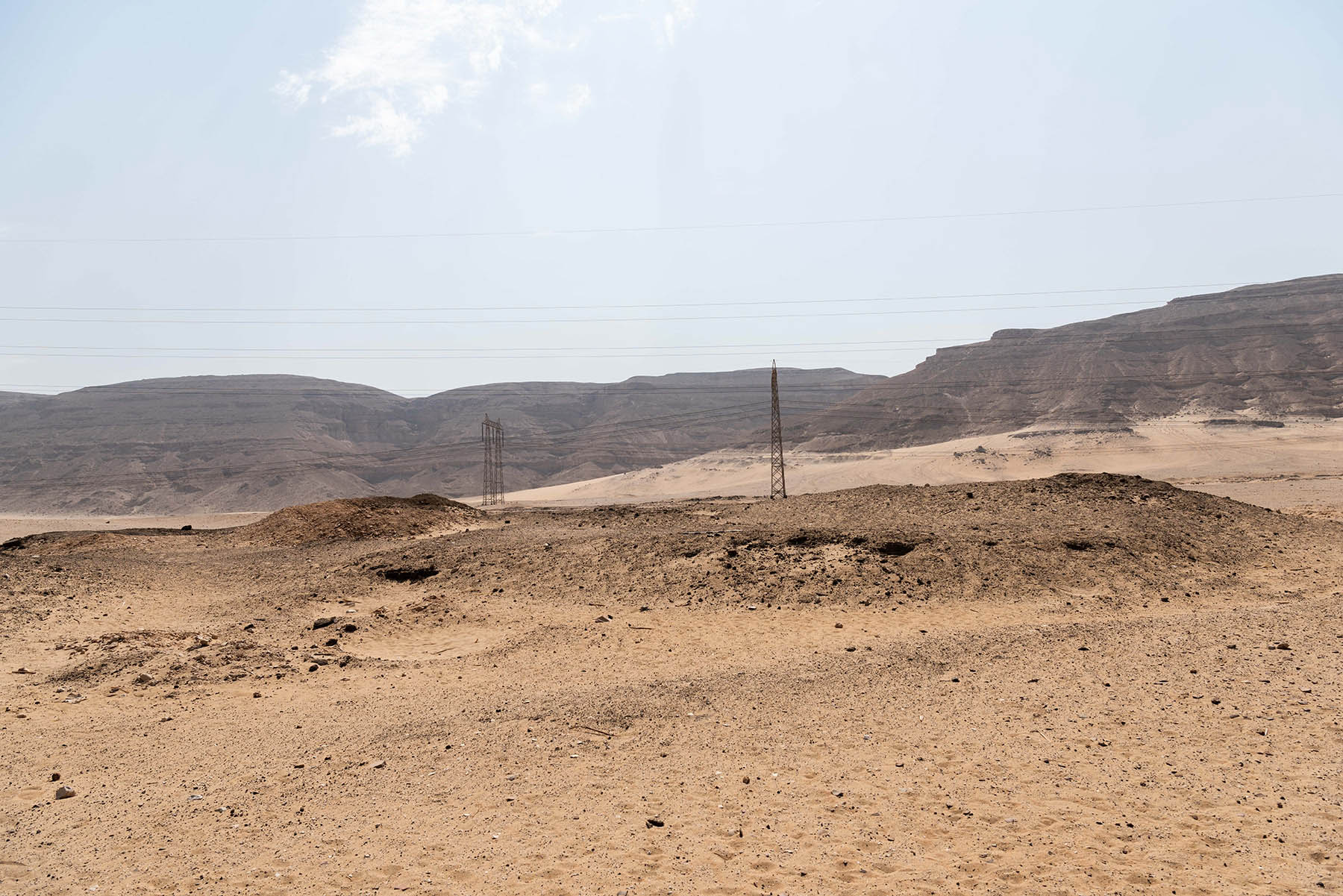
The ASP initiated this conservation project in response to repeated and very damaging illegal digging at the site over the years it had been unprotected. In order to tackle the complex work this entailed, the ASP enlisted the help of Anthony Crosby, a renowned expert in earthen architecture and conservation, who had worked previously in north Abydos with David O’Connor.
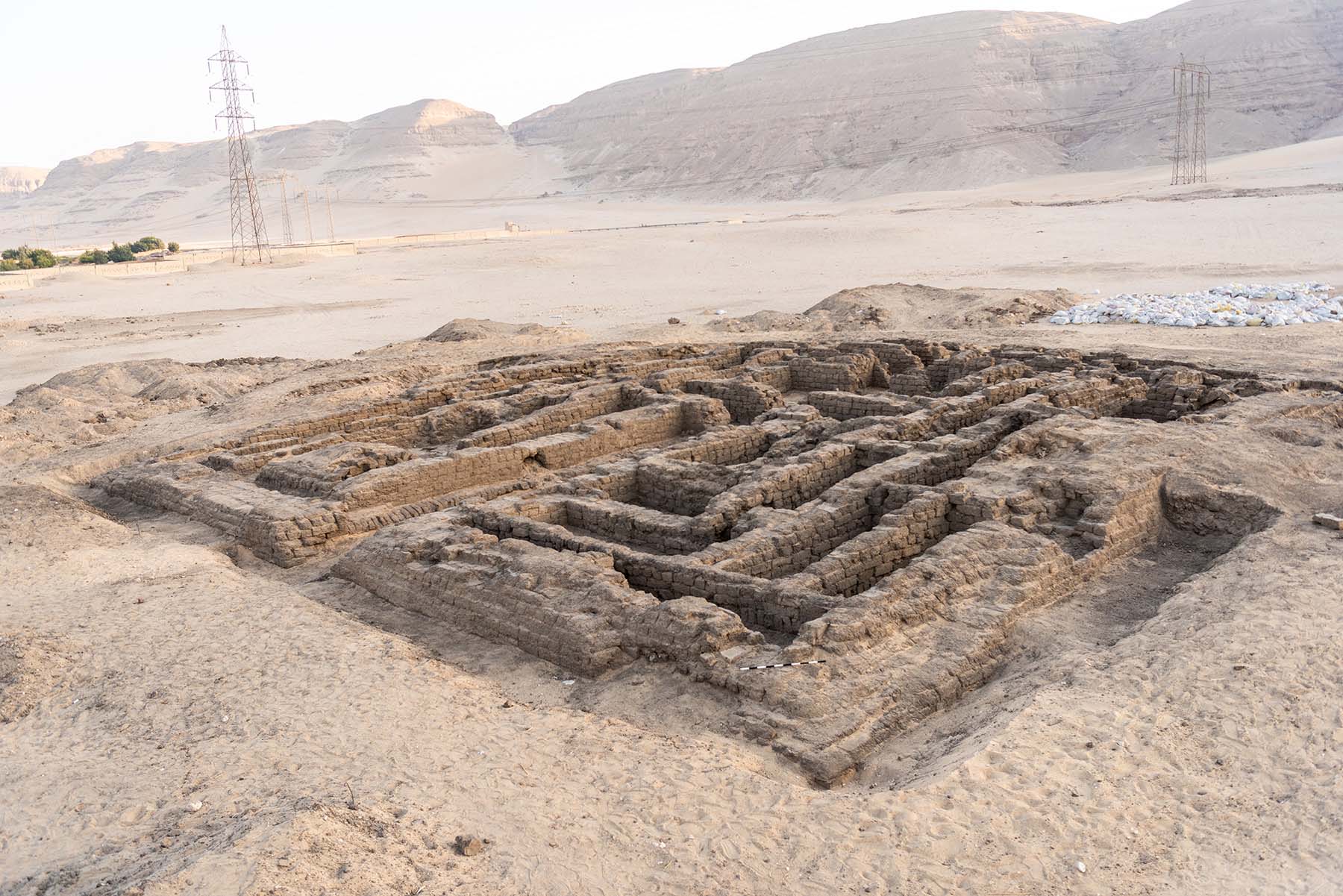
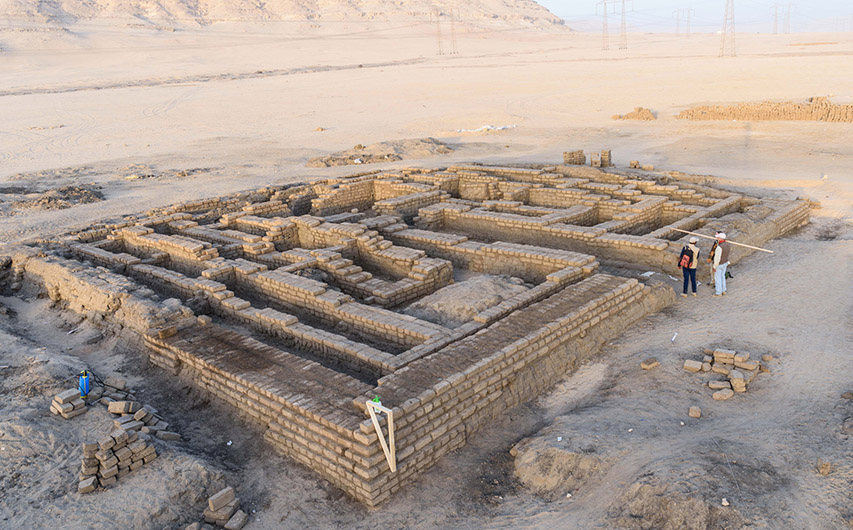
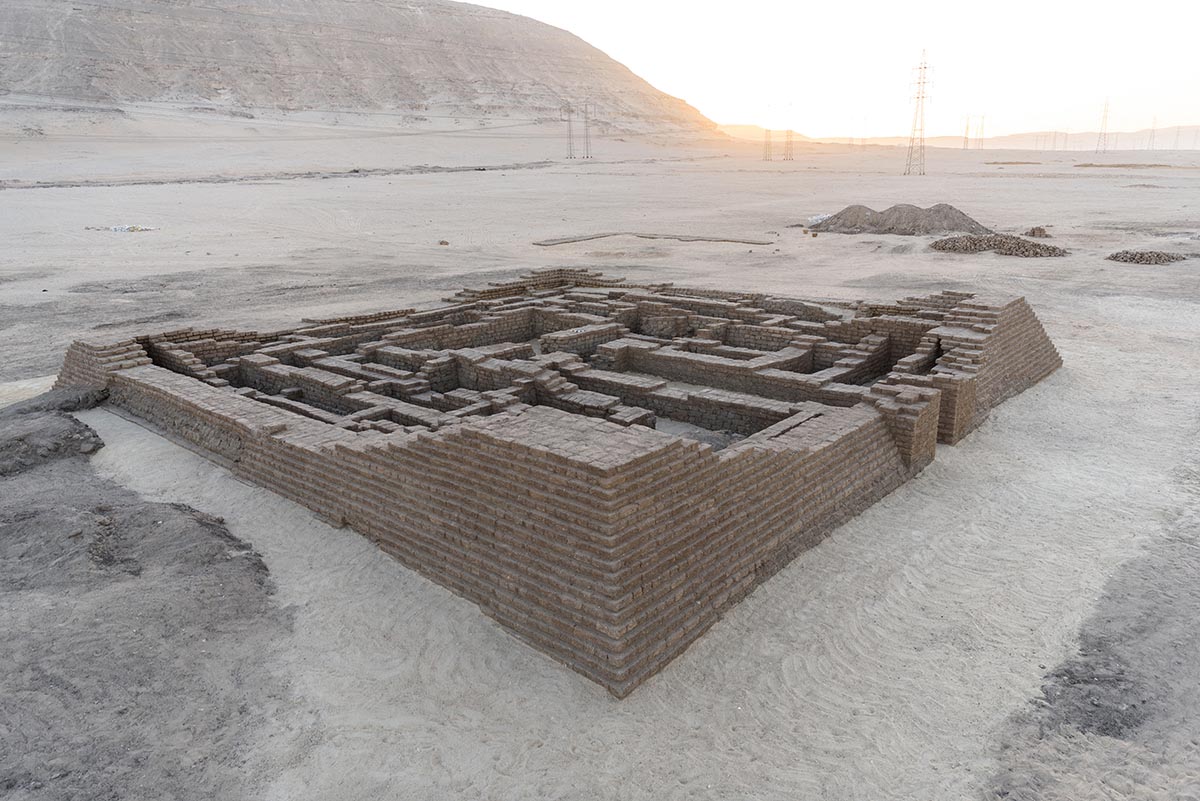
The pyramid is 24 meters square, and it utilized a rare building technique of internal chambers (referred to as “casemates”) that were filled with bricks and rubble. Ancient builders used a similar technique for palace platforms at Deir el Ballas in the time period just prior to Ahmose’s work here in Abydos. The only accessible parts of the pyramid were a long corridor entered from the local east face leading to a chapel space at the monument’s center. The corridor had a brick paved floor and the walls were plastered and white washed.
We determined based upon the surviving walls that the slope of the pyramid was approximately 62-63 degrees, or a 2:1 ratio, which means when completed, the pyramid would have risen 24 meters high. While restoring the monument to its initial height was a tempting proposition for the team, the scale of the structure put that outside of our reach. Instead, the overall goals of the project were to stabilize and protect the structure into the future and to restore enough to make it very clear exactly how the pyramid was constructed and to some extent how the pyramid eventually fell. Important features to clarify by partial restoration were (1) the actual slope of the exterior walls, (2) the basic pyramid geometry, (3) the structural system and how it performed and (4) the structural deformation and the structure failure and collapse.
The project began by clearing out backfill from previous work at the site and then continued excavation to the foundations of all the walls in order to properly map the monument and gain further understanding of how it was built. We drew on local teams of specialized mud brick makers to produce 40,000 new mud bricks for the conservation work. This work began with stabilizing the existing mud brick walls by repairing undercut walls, by applying a protective top course above fragile mud bricks, and by filling holes and missing wall components with new mud bricks. The shape of leaning and collapsing interior walls was maintained, as these characteristics of structural failure were important components to preserve.
The restoration phase consisted primarily of adding additional courses to the four corners, further defining the entrance area, and constructing three interior walls in the local west area of the monument that had been partially destroyed by trenching to reach the interior of the structure at an unknown time in the past.
By the end of our first phase of conservation, the final height of the pyramid’s corners reached between 1-1/2 to 2-1/2 meters, and we were able to visually define the straight jambs along the entrance corridor. All new mud bricks that would be visible were textured by abrading the surfaces to decrease any abrupt contrast between the old and the new bricks. Areas of ancient collapse around the exterior were preserved, and then we refilled the structure with clean sand.
The next phase of work at the pyramid will include some minor additional restoration of the interior spaces and perhaps bringing the corners up a few more courses. We also hope to restore the large 80m x 60m mud brick wall that encloses the pyramid. Finally we will add signage and other modes of interpretation, in hopes to ultimately open the pyramid to visitors and allow many people the opportunity to see such an exceptionally unusual and interesting monument in the great landscape of Abydos.
This selection is taken from an article originally published in Expedition Magazine, the journal of the Penn Museum, v.65 no. 3 March 2024
https://www.penn.museum/sites/expedition/conserving-the-pyramid-of-queen-tetisheri/